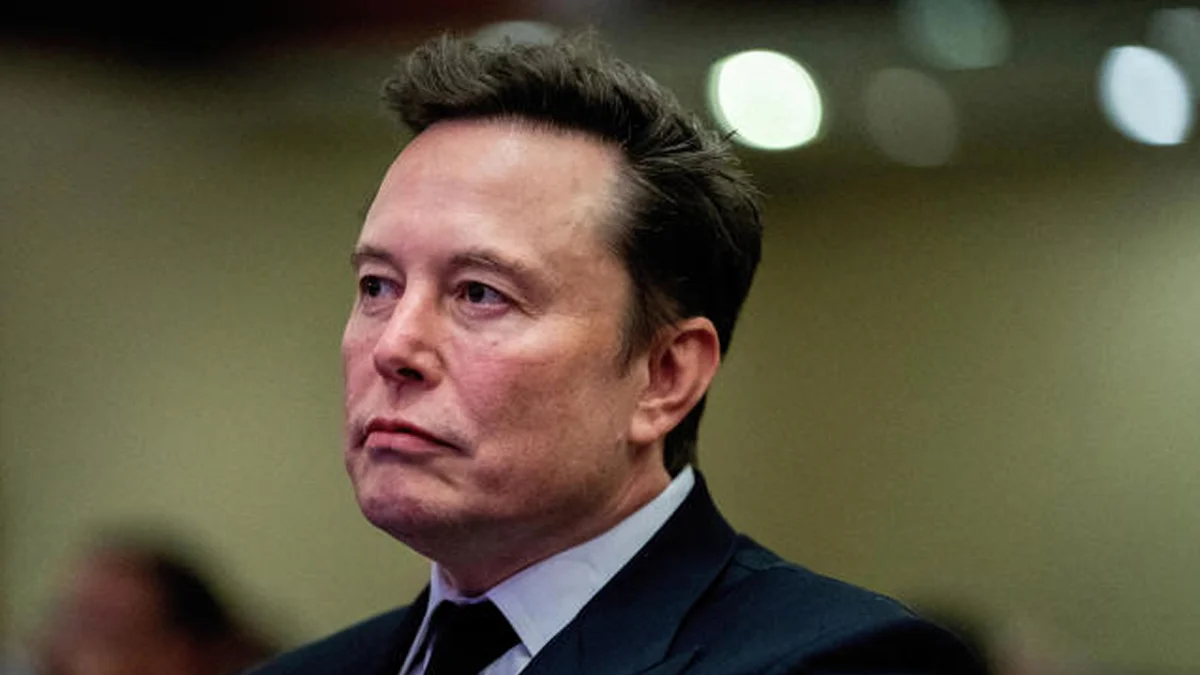
The future of artificial intelligence is no longer just a technical debate—it’s a courtroom drama. At the heart of the storm: a legal showdown between Elon Musk and Sam Altman, two of Silicon Valley’s most influential minds, over the soul of OpenAI. What began as a shared vision for open, benevolent AI has fractured into a bitter dispute over control, ethics, and the very mission of one of the world’s most consequential tech companies.
This isn’t just corporate infighting. It’s a philosophical rift played out in legal filings, public statements, and boardroom maneuvers—each side claiming to protect the original promise of OpenAI from being compromised.
The Origins of the Rift
OpenAI was founded in 2015 with a clear, idealistic mission: to ensure that artificial general intelligence (AGI) benefits all of humanity. Founders included Sam Altman, Elon Musk, Ilya Sutskever, and others who believed that AI development should be transparent, non-profit-driven, and insulated from short-term corporate interests.
Musk, an early financier, contributed up to $100 million and was deeply involved in the initial strategy. But by 2018, he stepped down from the board, citing conflicts with Tesla’s own AI ambitions. Privately, sources suggest tensions had already surfaced over the pace of progress and the direction of research.
The real fracture point came in 2019, when OpenAI restructured into a “capped-profit” model under OpenAI LP, backed by a massive $1 billion investment from Microsoft. Musk saw this as a betrayal of the original open-source, non-profit ethos. He claimed the transition prioritized profit over public good and accused Altman of steering OpenAI toward proprietary models and closed systems.
“The agreement was to develop AI for the public good. What we have now is a closed, profit-driven entity aligned with a tech giant. That’s not what we signed up for,” Musk reportedly stated in early 2023 communications.
The Legal Battle Takes Shape
In early 2024, Musk filed a lawsuit against OpenAI and Sam Altman, alleging breach of contract and fiduciary duty. The core argument: OpenAI had abandoned its founding principles by entering an exclusive partnership with Microsoft, commercializing models like GPT-4, and moving away from open-source transparency.
The suit seeks to force OpenAI to return to its non-profit roots or, alternatively, to release its research and model weights under open licenses. Musk’s legal team argues that the original agreement included a clause requiring OpenAI to remain open and non-commercial if it ever accepted major external funding—conditions they claim Microsoft’s involvement violated.
Altman’s defense? Necessity. Developing cutting-edge AI requires billions in compute, talent, and infrastructure. The Microsoft partnership wasn’t a betrayal—it was survival. “We could either stay small and idealistic, or scale and change the world,” Altman said in a March interview. “We chose impact.”
But critics, including Musk, argue that impact without oversight is dangerous. They point to the rapid deployment of models with minimal transparency, questionable data sourcing, and concentration of power in few hands.
Control, Power, and the Role of Microsoft
Central to the dispute is Microsoft’s growing influence. Since its 2019 investment, Microsoft has poured over $13 billion into OpenAI and secured exclusive licensing rights to its technology. OpenAI’s models now power Microsoft’s Copilot suite, Bing AI, and enterprise tools.

Musk’s legal filings suggest this arrangement effectively turns OpenAI into a de facto subsidiary of Microsoft—undermining claims of independence. He argues that OpenAI’s board, once majority non-profit, has become a hand-picked group aligned with Altman and Microsoft’s commercial interests.
“You can’t claim to be a public-benefit mission-driven org while licensing your most powerful tech exclusively to a $2 trillion corporation,” Musk said in a tweet that later became part of court evidence.
Altman counters that Microsoft’s investment enabled breakthroughs that wouldn’t be possible otherwise. GPT-4, DALL·E 3, and real-time voice models like Whisper required data centers, GPU clusters, and engineering scale only a partner like Microsoft could provide.
But the deeper issue isn’t just funding—it’s control. With Microsoft holding commercial rights and OpenAI retaining research autonomy (on paper), the balance is precarious. And Musk fears that as models approach AGI, that balance could tilt dangerously toward profit and away from safety.
The Philosophical Divide: Open vs. Controlled AI
At its core, this isn’t just about contracts—it’s about competing visions for AI’s future.
Musk’s Vision: Open, Transparent, Decentralized Musk believes AI should be open-source, auditable, and globally accessible. He’s put his money where his mouth is—launching xAI in 2023 with the goal of building “truth-seeking” AI, and pledging to open-source parts of Grok. His stance: if we can’t see how AI works, we can’t trust it.
Altman’s Vision: Controlled, Scalable, Impact-Driven Altman argues that frontier models are too powerful to be open-sourced. He points to risks like misinformation, weaponization, and unintended behavior. In his view, responsible development means controlled access, rigorous safety testing, and gradual deployment.
This mirrors a broader split in the AI community. On one side: researchers like Yoshua Bengio and Timnit Gebru, who warn against unchecked corporate control. On the other: industry leaders like Sundar Pichai and Jensen Huang, who believe only large organizations can manage the complexity and cost of advanced AI.
The Musk-Altman clash crystallizes this tension. One wants to democratize AI. The other wants to industrialize it.
What’s at Stake Beyond OpenAI?
The outcome of this lawsuit could reshape the AI landscape.
If Musk wins, it could force OpenAI to open-source its models or revert to a fully non-profit structure—potentially unraveling its Microsoft partnership. Competitors like Anthropic or Meta might accelerate open efforts to gain credibility.
If Altman prevails, it reinforces the model of private, closed AI development backed by big tech. That could deter future open initiatives and consolidate power among a few well-funded players.
But there’s a third path: regulatory intervention. Governments are watching closely. The EU’s AI Act, U.S. executive orders on AI safety, and global summits like the one at Bletchley Park suggest that the era of self-governance may be ending.
A court ruling favoring Musk could accelerate calls for public oversight. A win for Altman might prompt stricter regulations to counterbalance corporate dominance.
Real-World Implications for Developers and Businesses
For startups and developers relying on OpenAI’s API, the uncertainty is real. If future models are restricted or licensing terms change due to legal outcomes, tooling, integrations, and product roadmaps could be disrupted.
Consider a SaaS company using GPT-4 for customer support automation. If OpenAI pivots to a fully closed model or raises prices due to legal pressure, that business faces added costs or technical debt.
Conversely, if Musk forces OpenAI to open-source its models, smaller players could access powerful AI without API fees—leveling the playing field.
Businesses should:
- Diversify AI dependencies (e.g., use Llama 3, Claude, or local models)
- Monitor legal developments quarterly
- Build modular AI pipelines that allow model swapping
- Audit data usage and compliance in case of policy shifts
What a Resolution Could Look Like
Total victory for either side is unlikely. More plausible outcomes include:
- Settlement with structural changes: OpenAI agrees to release certain models as open-source while retaining commercial rights for newer versions.
- Regulatory referral: The court pushes the issue to federal agencies, leading to new AI governance frameworks.
- Board restructuring: A neutral third-party oversight body is installed to ensure mission alignment.
- Spin-out of non-profit arm: OpenAI splits into a commercial entity and a separate research foundation.
Whatever the resolution, it must address the core issue: trust. Public confidence in AI hinges on transparency, accountability, and equitable access. Neither unchecked corporate control nor chaotic open release is sustainable.
The Human Cost of AI Power Struggles
Behind the legal jargon and billion-dollar stakes are real people. Researchers at OpenAI have reported pressure to prioritize speed over safety. Whistleblowers have raised concerns about data practices and model behavior. The internal culture, once collaborative, is now described as strained and hierarchical.
Musk, for all his controversy, has consistently pushed for accountability. His lawsuit may be self-interested—xAI competes directly with OpenAI—but it also highlights legitimate concerns about opacity in AI development.
Altman, meanwhile, isn’t a villain. He’s driven by ambition to build transformative technology. But ambition without oversight breeds risk.
The court case isn’t just about who owns OpenAI. It’s about who gets to decide how AI evolves—and for whose benefit.
Closing: What You Should Do Now
The Musk vs. Altman battle is more than a celebrity feud—it’s a referendum on the future of AI. Whether you’re a developer, executive, or concerned citizen, take action:
- Stay informed: Follow legal filings, OpenAI’s blog, and regulatory updates.
- Diversify AI tools: Don’t rely on a single provider.
- Advocate for transparency: Support policies that promote open research and safety audits.
- Question narratives: Both Musk and Altman have agendas. Seek balanced perspectives.
The fate of OpenAI isn’t just theirs to decide. It belongs to all of us.
Frequently Asked Questions
Why is Elon Musk suing OpenAI? Musk claims OpenAI abandoned its original non-profit, open-source mission by partnering exclusively with Microsoft and commercializing its AI models, violating founding agreements.
Is Sam Altman legally obligated to keep OpenAI non-profit? The original charter emphasized public benefit, but the 2019 shift to a capped-profit model with Microsoft investment changed its structure. Musk argues this breached fiduciary duties.
Could OpenAI be forced to open-source GPT models? It’s possible if Musk wins and the court orders compliance with original terms, but unlikely due to national security and competitive concerns.
How does Microsoft benefit from this lawsuit? The legal uncertainty could delay competition, but a forced breakup of OpenAI’s partnership could harm Microsoft’s AI ambitions.
What happens to ChatGPT if OpenAI loses the case? ChatGPT would likely continue, but its development model, pricing, or access could change depending on restructuring outcomes.
Is this lawsuit just about ego and rivalry? While personal tensions exist, the case raises legitimate governance and ethical questions about AI’s direction.
How can developers prepare for changes at OpenAI? Use modular AI architectures, monitor legal developments, and maintain alternatives like open-source LLMs (e.g., Llama, Mistral).
FAQ
What should you look for in Musk vs Altman: Tech Titans Clash Over OpenAI's Future? Focus on relevance, practical value, and how well the solution matches real user intent.
Is Musk vs Altman: Tech Titans Clash Over OpenAI's Future suitable for beginners? That depends on the workflow, but a clear step-by-step approach usually makes it easier to start.
How do you compare options around Musk vs Altman: Tech Titans Clash Over OpenAI's Future? Compare features, trust signals, limitations, pricing, and ease of implementation.
What mistakes should you avoid? Avoid generic choices, weak validation, and decisions based only on marketing claims.
What is the next best step? Shortlist the most relevant options, validate them quickly, and refine from real-world results.