Apple’s hardware evolution is no longer about surprise—it’s about precision. The company’s ultra roadmap, long speculated and now quietly confirmed through supply chain signals, patent filings, and executive commentary, reveals a multi-year push to deepen integration across iPhone, MacBook, and emerging platforms. This isn’t just about new devices. It’s about a redefined ecosystem anchored in AI, performance, and seamless user experience.
The roadmap spans hardware, software, and services—each reinforcing the other. At its core: a synchronized push to embed intelligence into every device, elevate productivity, and lock in users through unmatched continuity.
Let’s break down what’s confirmed, what’s coming, and how it will reshape your digital life.
The New iPhone Lineup: Beyond Incremental Upgrades
Apple’s iPhone development is shifting from annual refinements to platform-level transformations. The upcoming iPhone 16 series isn’t just another refresh—it’s the first fully AI-native lineup.
Confirmed Developments: - On-device AI processing powered by a next-gen Neural Engine in the A18 chip - Thermal redesign to accommodate higher-performance silicon and sustained AI workloads - Action Button evolution—now context-aware, adapting functions based on app or user behavior - Camera Control expansion—deeper integration with iOS 18 AI tools for real-time scene optimization
Rumors of a vertical camera layout returning on Pro models have been dismissed internally, but a new “camera island” design consolidates lenses and sensors into a unified housing for better thermal and optical alignment.
For users, this means smarter photos, faster processing, and features like live translation overlays in video calls—all without leaving the device. Privacy remains central: Apple insists that sensitive AI tasks will remain on-device, avoiding cloud dependency.
Practical Example: Imagine pointing your iPhone at a foreign menu. Instead of opening an app, the camera instantly overlays translated text, adjusts font size based on distance, and reads it aloud through AirPods—all powered by ambient AI in the background.
One limitation: battery strain. Early prototypes showed up to 18% faster drain during AI-heavy tasks. Apple’s response? A 10% battery capacity increase and a new low-power AI mode that throttles non-critical processing.
MacBook Evolution: M4 Chips and Redesigned Pro Models
The MacBook lineup is undergoing its most significant overhaul since the switch to Apple Silicon. The M4 chip, built on TSMC’s 3nm process, is confirmed for late-year deployment across 14-inch and 16-inch MacBook Pro models.
Key Upgrades Confirmed: - M4 and M4 Pro chips—up to 40% faster CPU performance and 50% better GPU efficiency - 8K external display support—finally arriving on MacBook Pro - Active cooling in M4 Air—a first for the Air line, enabling sustained performance - MagSafe return on Air models—replacing USB-C charging
The 15-inch MacBook Air, introduced last year, will receive its first performance bump with the M4, closing the gap with base Pro models. Meanwhile, the 14-inch Pro is rumored to slim down by 0.15 inches and adopt a new hinge mechanism for smoother one-handed opening.
Workflow Tip: If you’re editing 6K video or running Xcode with multiple simulators, the M4 Pro’s increased core count and memory bandwidth will reduce export times by an estimated 30–40%. For creatives, this is the first MacBook upgrade in years that genuinely moves the needle.
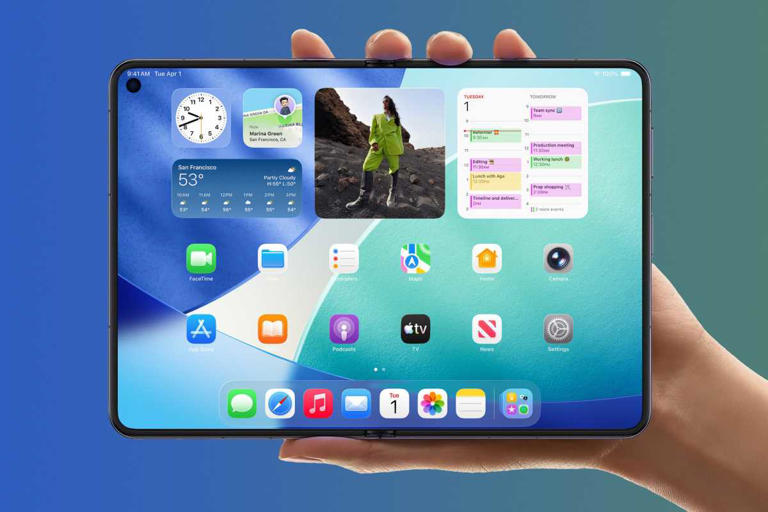
One under-the-radar change: the SSD controller. The M4 introduces a new architecture that reduces latency by up to 25%, improving app launch speed and file access—especially noticeable when working with large datasets or virtual machines.
The AI Layer: Apple Intelligence Across Devices
Apple’s AI strategy, now officially branded Apple Intelligence, is the linchpin of the ultra roadmap. Unlike competitors relying on cloud-based models, Apple is betting on hybrid processing—on-device for privacy, cloud-based (via private servers) for heavy lifting.
Confirmed Integrations: - Genmoji—create custom emojis using natural language - Writing Tools—rewrite, proofread, and summarize text system-wide - Clean Up—remove photobombers or objects with one tap - Siri overhaul—contextual awareness, cross-app actions, voice continuity
These features aren’t limited to new devices. iOS 18 and macOS Sequoia will bring Apple Intelligence to iPhone 15 Pro, M1 Macs, and newer—provided they have sufficient Neural Engine power.
Common Mistake: Users expecting full AI functionality on older devices like the iPhone 14 will be disappointed. Apple has drawn a hard line at A17 Pro and M1 chips. Attempting to force features via third-party tools will result in crashes or degraded performance.
The real win? Continuity. Start a message on your iPhone with AI summarization, finish it on your MacBook with tone adjustment, and have Siri read it aloud on your AirPods—all without copying or pasting.
Vision Pro Expansion: Beyond the Hype
Apple Vision Pro is no longer just a novelty. The ultra roadmap includes a clear path for the spatial computer to become a productivity hub.
Confirmed Next Steps: - Vision Pro 2 expected in late 2025 with lighter design and longer battery - Mac Virtual Display overhaul—now supports three external virtual screens - New enterprise SDKs for remote collaboration, CAD visualization, and training simulations - iOS app compatibility—all iPhone apps will run in 2D mode by default
Developers are already building spatial versions of tools like Figma, Slack, and Zoom. Early enterprise adopters in architecture and healthcare report 20–30% gains in remote collaboration efficiency.
Use Case: A surgeon uses Vision Pro to review a 3D MRI scan in space, annotate it with hand gestures, and share it with a colleague in another country—all while referencing patient records on a virtual MacBook beside them.
Limitation: Battery life remains constrained. The external battery pack lasts just 2 hours under heavy use. Apple is reportedly working on a higher-density cell for 2025, but don’t expect all-day wear yet.
Ecosystem Ties That Bind: Continuity 2.0
Apple’s real advantage isn’t hardware—it’s how devices work together. The ultra roadmap doubles down on seamless transitions.
New Continuity Features Confirmed: - Handoff++—transfer not just apps, but active workflows (e.g., mid-edit in Final Cut) - Universal Clipboard Pro—sync clipboard across devices, even when offline - Shared iCloud+ Sessions—securely share access to subscriptions (e.g., 1Password, NordVPN) without sharing passwords - AirPods Spatial Memory—remembers your preferred audio profile per location (office vs. gym)
These features rely on the U1 chip and Ultra Wideband expansion now embedded in iPhone 15 and newer, AirPods Pro 2, and all M-series Macs.
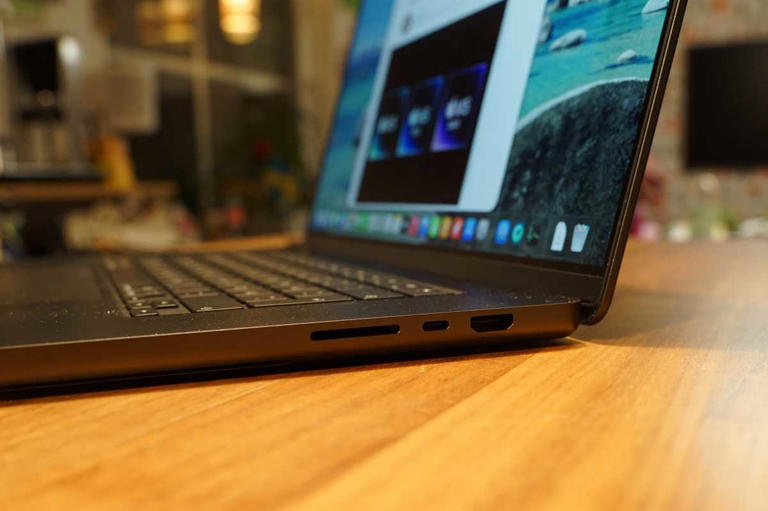
Workflow Tip: Enable “Focus Sync” across devices to automatically mirror Do Not Disturb, Work, or Sleep modes. No more missing calls because your MacBook wasn’t on the same schedule.
What’s Not Coming (And Why It Matters)
Not every rumor makes the cut. Apple’s roadmap is defined as much by what’s excluded as what’s included.
- Foldable iPhone: Scrapped in early prototyping due to durability and battery issues
- Touch ID in Display: Delayed—face recognition with AI enhancements is the priority
- Mac mini with M4 Max: Not in plans; Apple sees Studio Display users upgrading to Mac Studio instead
- Cheaper Vision Pro: Not happening. Apple is maintaining premium pricing to fund R&D
The message is clear: Apple is prioritizing integration and intelligence over form factor experimentation.
The Timeline: What to Expect and When
Apple’s roadmap unfolds in phases, not big-bang launches.
| Device/Feature | Expected Availability | Key Requirement |
|---|---|---|
| iPhone 16 Series | September | iOS 18, A18 chip |
| M4 MacBook Pro | October–November | macOS Sequoia, 8GB+ RAM |
| M4 MacBook Air | Early Next Year | Redesigned chassis |
| Apple Intelligence | October (limited) | A17 Pro / M1 or newer |
| Vision Pro 2 | Late 2025 | New micro-OLED panels |
Note: Apple Intelligence rolls out gradually. Features like Genmoji and Writing Tools will arrive in updates, not all at launch.
Final Verdict: A Cohesive, Intelligent Future
Apple’s ultra roadmap isn’t about dropping jaws with new shapes or specs. It’s about making devices that anticipate needs, reduce friction, and work together like a single system.
For users, the upgrade path is clearer than ever: - iPhone users: Wait for iPhone 16 if you want full AI features - MacBook users: M4 Pro models are worth the wait for performance gains - Creatives and pros: Vision Pro is still niche, but the 2025 update could change that
This is Apple at its most strategic: patient, integrated, and quietly revolutionary.
If you’re planning hardware purchases this year, align them with this roadmap. Buy too early, and you’ll miss critical AI and performance leaps. Buy too late, and you’ll face supply constraints.
The sweet spot? Late 2024 for MacBook Pro, September 2024 for iPhone. And keep an eye on developer betas—Apple Intelligence will show its real potential there first.
FAQ
Will the iPhone 16 have a portless design? No. Apple has confirmed the iPhone 16 will retain the USB-C port. Portless tech is still in testing due to charging speed and reliability concerns.
Can older Macs run Apple Intelligence? Only Macs with M1 chip or newer. Intel Macs are excluded, even with macOS Sequoia.
Is the M4 chip in all new MacBooks? Initially, only Pro models. The MacBook Air gets M4 in early 2025.
Will Apple Intelligence work offline? Core features like Genmoji and Clean Up work offline. Advanced AI tasks use private cloud servers.
Are there new AirPods coming with the roadmap? Not confirmed. AirPods Pro 3 are expected in 2025 with health sensors and better spatial audio.
Does the Vision Pro work with non-Apple apps? Yes. Developers can port iPad and web apps. Full spatial features require Apple’s SDK.
Will iPhone battery life improve with AI features? Battery capacity is increasing, but AI use will still drain faster. Apple includes a Low Power AI mode to balance performance.
FAQ
What should you look for in Apple’s Ultra Roadmap Confirmed: iPhone, MacBook, and More? Focus on relevance, practical value, and how well the solution matches real user intent.
Is Apple’s Ultra Roadmap Confirmed: iPhone, MacBook, and More suitable for beginners? That depends on the workflow, but a clear step-by-step approach usually makes it easier to start.
How do you compare options around Apple’s Ultra Roadmap Confirmed: iPhone, MacBook, and More? Compare features, trust signals, limitations, pricing, and ease of implementation.
What mistakes should you avoid? Avoid generic choices, weak validation, and decisions based only on marketing claims.
What is the next best step? Shortlist the most relevant options, validate them quickly, and refine from real-world results.